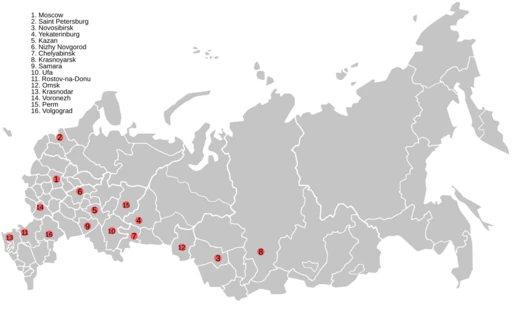
Vladikavkaz
Capital of North Ossetia–Alania, founded as a Russian fortress in 1784.
Vladikavkaz, the capital of North Ossetia–Alania in Russia, sits at the foot of the Caucasus mountains along the Terek River. It was established in 1784 as a Russian fortress near the entrance to the Darial Gorge, intended to secure the route between Russia and Georgia. Some sources say it was built on the site of the Ingush village Zaur, while others claim it replaced the Ossetian village of Kapkai. The city’s Russian name means “ruler of the Caucasus,” while the Ossetian name Dzaudzhikau translates to “Dzaug’s settlement.” Over the years, it has also been called Ordzhonikidze and Dzaudzhikau.
The city grew into a key industrial and transport hub. The Georgian Military Highway, completed in 1799, linked it to Georgia, and a railway connecting Rostov-on-Don and Baku arrived in 1875. Today, Vladikavkaz produces processed zinc and lead, machinery, chemicals, clothing, and food. It is served by a bus network, trams (since 1904), trolleybuses (since 1977), and a main railway station. Beslan Airport lies about nine kilometres away. The Georgian Military Road, part of European route E117, starts here and leads into the South Caucasus.
Vladikavkaz has seen conflict. During the Russian Civil War, the anti-Communist Volunteer Army under General Anton Denikin took the city in February 1919, but the Red Army pushed them out in March 1920. In early November 1942, Nazi German forces attempted to capture the city but were repelled by the Soviet army, leaving North Ossetia by January 1943. More recently, mayor Vitaly Karayev was assassinated on 26 November 2008, and his successor, Kazbek Pagiyev, was killed on 31 December 2008.
The city’s population was 311,693 in the 2021 Census, making it one of the most populous in the North Caucasus. In 1916, it had 73,243 residents. Administratively, Vladikavkaz is divided into four districts: Zaterechny, Iristonsky, Promishlenny, and Severo-Zapadny. It functions as a city under republic jurisdiction, which includes six rural localities, and is also incorporated as Vladikavkaz Urban Okrug.
The Mukhtarov Mosque, built in 1906, is a prominent landmark. Another notable structure is a 198-metre-tall guyed TV mast from 1961, featuring six crossbars with gangways on two levels. For sports, the city was home to FC Spartak Vladikavkaz, which won the Russian Premier League in 1995 before folding in 2020; it was succeeded by FC Alania Vladi
- Founded
- 1784
- Population (2021 Census)
- 311,693
- Country
- Russia
- Republic
- North Ossetia–Alania
- Known for
- Industrial centre, capital of North Ossetia–Alania, site of battles in Russian Civil War and World War II
Lore & Background
The city was founded in 1784 as a Russian fortress at the entrance to the Darial Gorge, near the Ingush village Zaur, though other sources say it was on the site of the Ossetian village of Kapkai. The Georgian Military Highway was constructed in 1799 to link the city with Georgia, and a railway connected it to Rostov-on-Don and Baku in 1875. During the Russian Empire, Vladikavkaz was the administrative capital of the Vladikavkazsky Okrug of the Terek Oblast.
In 1931, the city was renamed Ordzhonikidze in honor of Soviet leader Sergo Ordzhonikidze. After the deportation of Chechens and Ingush in 1944, it was renamed Dzaudzhikau, then again Ordzhonikidze in 1954. In 1990, it acquired the double name Vladikavkaz in Russian and Dzaudzhikau in Ossetian. The city was fought over in both the Russian Civil War and World War II, with the Volunteer Army seizing it in February 1919 and the Red Army expelling them in March 1920; Nazi Germany attempted to seize it in November 1942 but was repelled.
Vladikavkaz is an industrial and transportation centre, producing processed zinc and lead, machinery, chemicals, clothing and food products. It is served by a bus network, tram (since 1904), trolleybus (since 1977), a main railway station, and Beslan Airport located about 9 kilometres from the city. The city is home to the Mukhtarov Mosque, built in 1906, and a 198-meter guyed TV mast built in 1961.
Reader's Guide
Vladikavkaz holds significance as the capital of North Ossetia–Alania and a major industrial and transportation hub in the North Caucasus. Its founding in 1784 as a Russian fortress established it as a strategic outpost for communication between Russia and Georgia, a role reinforced by the construction of the Georgian Military Highway and later the railway. The city's history reflects the turbulent politics of the region, including name changes tied to Soviet leaders and ethnic deportations, as well as its involvement in the Russian Civil War and World War II. Its industrial base—processing zinc and lead, manufacturing machinery, chemicals, clothing, and food products—has made it an economic centre. The city's cultural landmarks, such as the Mukhtarov Mosque and its sports legacy, including FC Spartak Vladikavkaz's 1995 Russian Premier League win, contribute to its regional importance. The assassinations of two mayors in 2008 highlight ongoing challenges. Vladikavkaz remains a key urban centre in the Russian-controlled Caucasus, with a diverse population and a mix of Eastern Orthodox, Sunni Muslim, and folk religious traditions.
Did You Know?
- The name Vladikavkaz literally means 'ruler of the Caucasus' in Russian.
- The city was founded in 1784 as a Russian fortress at the entrance to the Darial Gorge.
- In 1990, the city acquired a double name: Vladikavkaz in Russian and Dzaudzhikau in Ossetian.
- The Mukhtarov Mosque, built in 1906, dominates the city.
Frequently Asked Questions
Who is Vladikavkaz?
Vladikavkaz is the capital city of the North Ossetia–Alania republic in southern Russia, home to roughly 312,000 people as of the 2021 census. It sits at the base of the Caucasus range right along the banks of the Terek River.
What are Vladikavkaz's powers or role?
The city serves as the main industrial hub and administrative center for North Ossetia–Alania. Its strategic position guarding the Darial Gorge corridor has made it a critical crossroads between Russia and Georgia since the 18th century.
How does Vladikavkaz's origin story go?
The city was laid out in 1784 as a Russian military fortification to protect the mountain pass into the Darial Gorge. Accounts differ on what stood there before—some say it was built over the Ingush settlement of Zaur, while others point to the Ossetian village of Kapkai.
Why is Vladikavkaz important in the broader story?
The city saw fighting during both the Russian Civil War and World War II, cementing its place in military history. Its very name—literally 'ruler of the Caucasus'—reflects the imperial ambition behind its founding.
What is Vladikavkaz's true name?
In Ossetian, the city is called Dzaudzhikau, meaning 'Dzaug's settlement,' a reference to a local figure. It also went by the Soviet-era name Ordzhonikidze before reverting to its original Russian designation.
More in Russian Cities 1-17
Spotted an error? Know more?
This is a living reference — every entry is fact-audited, and reader corrections feed straight into our audit queue. Suggest an edit · See this site's audit record